
Can A Defective Charger Cause A Lithium-Ion Battery Fire?
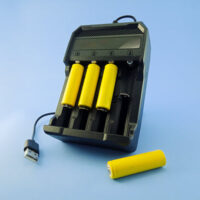
If a lithium-ion battery bursts into flames, it’s likely to be considered faulty. Although this is the most common cause of lithium-ion battery fires, the problem is not necessarily always with the battery; a fire can also be caused by the charger.
If the charger is defective, there could be problems associated with either an excess or insufficient current or voltage being provided to the battery. This can cause the battery to overheat, which can result in a fire due to the charger malfunctioning rather than the battery itself.
How chargers keep batteries safe
The modern lithium-ion battery is designed to be charged using chargers that regulate the electric current during the charging process. If the charger is working properly, it should signal to the battery or management system to stop charging once the battery is fully charged.
When the charging process is not regulated, the battery becomes unstable. The battery temperature can increase significantly, and the battery can enter thermal runaway, which can cause fires and explosions.
Issues that can lead to charging-related fires are the following:
- Poor voltage regulation
- Defects in internal wiring
- Inadequate insulation
- Electronic parts manufacturing defect
- Poor quality counterfeit chargers
- Non-compliant chargers
A properly manufactured battery can still be unsafe because of a charger issue.
Counterfeit and third-party chargers
Sometimes, customers buy replacement chargers that are cheaper than the OEM and easily available on the Internet. Sadly, this is not always the case, since some counterfeit chargers are not made according to safety regulations.
For example, some fake chargers resemble known companies but use lower-quality materials and lack important safety features. Some fake chargers incorrectly state compatibility with certain devices.
The problems with such chargers are that they do not control voltage, cannot handle overheating, and do not stop charging when needed. Such devices increase the risk of a lithium-ion battery fire.
Who is liable in a defective charger case?
If the fire was ignited by a defective charger, several entities may be responsible, depending on the case.
Those who might be liable include:
- The manufacturer of the charger
- The companies that engineered the defective charging parts
- Importers of defective goods
- The retailer selling the charger
- The online vendors selling counterfeit or defective charging units
It may be the case that the charger and battery have faults leading to the fire.
Why preserving evidence matters
After experiencing a lithium-ion battery fire, it is crucial to preserve as much evidence as possible. Do not throw away the broken charger, battery, or device if it is safe to keep them.
Possible evidence includes:
- The charger and the charging cable
- The broken battery and device
- Product packaging
- Receipts or invoices
- Pictures of the fire scene
This information can help engineers and fire experts establish whether the charger was faulty and whether the product was defective.
Talk to a Florida Product Liability Attorney Today
Halpern, Santos & Pinkert represent the interests of consumers who have suffered burn injuries, smoke inhalation, or property damage due to a defective lithium-ion battery or component. Call our Florida personal injury lawyers today to schedule an appointment, and we can begin investigating your case right away.
